
In the beginning of a new year, it’s common to see personalities from across the financial world chiming in as to what asset classes you should be investing in as you modify and tweak your personal portfolio, so it wasn’t all that surprising to see a piece up over at RegisteredRep.com addressing managed futures. After all, with asset flows continuing into the space, understanding how, why and if you should invest in managed futures is important. To be entirely fair, we’ll give the author props for addressing the opportunity in a more intelligent manner than most. Here was the piece:
How long do trends really last in this environment? And if we are entering a ‘new normal’ of sorts, where the markets reverse course on a dime and over short periods of time, how will managed futures perform? In 2011, not so great. The Altegris 40 Index, which tracks the performance of the 40 managed futures managers, was down 3.14 percent in 2011:
[DISCLAIMER ADDED: PAST PERFORMANCE IS NOT NECESSARILY INDICATIVE OF FUTURE RESULTS.]
Greg Anderson, chief investment officer of Princeton Fund Advisors, said managed futures managers can’t change positions quickly because they operate on a reactive basis. For example, when the markets shot up in October, these managers were positioned against the market, and many of these funds suffered.
Granted, 2012 has not seen the same level of volatility, with the VIX already down 24.87 percent year-to-date. When fear unwinds, you’ll see more trends developing, and managed futures managers can capitalize on that.
According to Sundt, managed futures strategies made money 12 out of the last 14 years; 2011 just happened to be very choppy, a hard environment for these funds to make money. These managers really need trends to last three months or longer to generate returns. Anything shorter and it becomes hard to jump on fast enough.
Still, I’m not convinced we’re out of the woods yet; volatility could rear its ugly head again. And if you’re looking for managed futures to smooth out your portfolio in these choppy times, be careful. We know that managed futures managers don’t try to predict where the markets will head, but they also can’t tell us how long the volatility will last, which is kryptonite to the success of their strategy.
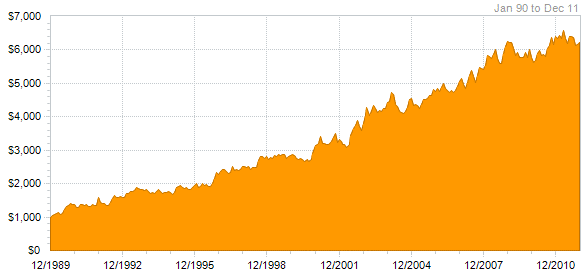
We’ll give the article a little bit of traction. Were the market conditions in 2011 ideal for trend followers? Absolutely not. We wrote about the unique trading climate in our 2012 Outlook several weeks ago. However, equating “these choppy times” with volatility is incorrect, in our opinion. Choppiness is different from volatility. Trends can and do emerge in volatile environments, and, indeed, managed futures are considered to be so-called “long volatility investments,” which historically do well in times of increased volatility.
2011 saw increased volatility, but the distinction in 2011 was choppy volatility, where we saw two extreme cases of existing trends reversing course quickly (by quickly, we mean less than two weeks). If this type of choppy volatility is the new normal, then, yes, the article may have a point. But it is hard to argue this kind of choppy volatility is the new normal when volatility itself has declined sharply since October of last year. You can’t really have choppy volatility without volatility, so something has already given.
Additionally, there are a few things to remember as you contextualize this information. For one, all indices provide an imperfect snapshot of an asset class, and are designed to serve a variety of purposes. The Altegris 40, per their own description, is comprised of the “top 40 composite CTA programs based on ending monthly equity for the previous month.” If you’re an investor attempting to gauge the asset class’ suitability for you, relying on the largest in the industry to set the tone may not necessarily be the best indicator. As we’ve written about in the past, bigger isn’t always better, and then there’s the issue of diversity. Simply based on the age of trend following as a strategy, the bulk of the biggest CTAs are going to be trend followers. While trend followers make up the bulk of the asset class, they aren’t the only game in town. Option sellers, multi-strategy managers, short-term programs and spread traders are also available, and we tend to recommend that individual investors diversify across strategy types to gain optimal performance in their managed futures portfolios.
In fact, a few of the top programs in our Semi-Annual CTA Rankings were option sellers, while spread traders like Emil Van Essen were also prosperous in the unique market climates. Past performance is not necessarily indicative of future results, but relying on indices alone to evaluate the merit of an investment into an asset class is short changing yourself a bit.
Finally, relying on this sort of logic (i.e. managed futures did poorly because we’re in a new environment and you should avoid it) leads investors to the “in at the top, out at the bottom” investing trap that is responsible for the lion’s share of investor underperformance, in our opinion. If you’re looking to jump in and out of the managed futures asset class, your experience is probably going to be a bad one. We recommend minimum investment times in an individual program of 3-5 years for investors to truly benefit from an allocation to managed futures, allowing for inevitable drawdowns and run-ups to occur. Attempting to assess managed futures on as a short a timeframe as one year, in our opinion, is foolhardy. Even looking at the equity curve above, it’s not a straight shot up. It’s impressive, but along the way to those great heights, there were plenty of dips in the road. We tell you that past performance is not necessarily indicative of future results for a reason; and that gets amplified the smaller your timeframe of performance consideration. We’re not going to argue that 2011 was a banner year for managed futures, but we’re also not going to ignore that it’s a sliver of the big picture that investors should be looking at when evaluating the asset class.
So, while we’re admittedly biased, to us, a poor environment portends a better environment ahead for managed futures. We’ve long been advocates of buying into the drawdown; it’s as close to the “getting-in-low” principle prized in the stock market as you’ll get around here. Perhaps that’s the silver lining to 2011’s lackluster performance; you now have a chance to get into quality programs at a bargain.