
It’s been over a year since we last dedicated a newsletter to the so-called managed futures mutual fund/ETF, and we thought it was high time we revisited the subject. Our last piece looked at the big name fund operators in the field– namely, the Wisdom Tree Managed Futures ETF (WDTI) and Rydex Managed Futures Fund (RYMFX)- arguing that these products were misnamed and did not give investors the type of managed futures exposure they were likely after when investing. While their performance then and to date has continued to be lackluster and well below managed futures as an asset class, it doesn’t seem to have hurt the popularity of the idea, with several smaller players now joining the fray to the tune of 19 such funds now clamoring after investor’s managed futures money. Hey, Morningstar even made them a fund category (anyone out there still arguing against their being an asset class?).
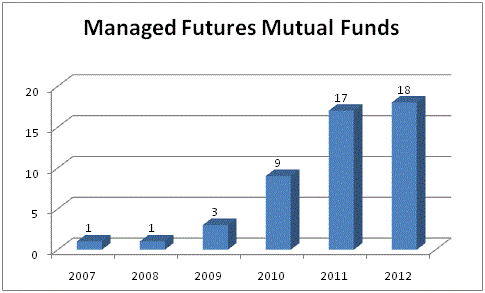
We found ourselves scratching our heads. Just why is so much money pouring into these so-called managed futures mutual funds when they have done very little in the way of performance? Part of the answer is the classic line from the brokerage side of Wall Street which says stocks (insert ETFs, mutual funds, mortgage backed securities, etc.) are sold, not bought- meaning that money is pouring into these products because that’s what the army of advisers (they don’t really call themselves stock brokers anymore) around the world are pitching to their clients, not the other way around.
But that begs the question… Why are these funds being sold so heartily? Part of that answer has to do with high fees for selling them, part of it is because people are still skeptical of stocks, and part of it is because managed futures is still a good story (boiled down in one line to – hey, it performed in 2008- even if past performance is not necessarily indicative of future results).
And that answer begs another question, do these advisors really know what they are selling (a recent blog posts says no) when it comes to managed futures exposure? Are the investors in so-called managed futures mutual funds really understanding what they are getting?
Well, we’re going to do our part to make sure those investors do know what they are getting, with an in-depth look at these products, and, unfortunately for the product managers, our research into the full universe of these publically traded products unearthed even more levels of complexity than we saw previously.