
On the 11th anniversary of the terrorist attacks that rocked the nation, the country is in a state of reflection. The War on Terror continues, and enemies, new and old, still dot the horizon. But in an era of economic fragility, the new enemy, deserved or not, has become uncertainty. The fiscal cliff has been shoved to the peripheral as politics take center stage. No one ever expected the country’s fiscal issues to be addressed before November, but the debt rating agencies, this time around at least, don’t seem to be on board with the delay strategy. Bloomberg reports:
Moody’s Investors Service said it may join Standard & Poor’s in downgrading the U.S.’s credit rating unless Congress next year reduces the percentage of debt- to-gross-domestic-product during budget negotiations.
The U.S. economy will probably tip into recession next year if lawmakers and President Barack Obama can’t break an impasse over the federal budget and if George W. Bush-era tax cuts expire in what’s become known as the “fiscal cliff,” according to a report by the nonpartisan Congressional Budget Office published on Aug. 22. The rating would likely be cut to Aa1 from Aaa if an agreement on the debt ratio isn’t reached, Moody’s said in a statement today.
We’ve danced this dance before. Last August, the idea of the U.S. credit rating taking a hit was inconceivable. Visions of fiscal collapse dance through our heads, but before we succumb to recurring nightmares, let’s remind ourselves of what actually happened in the weeks and months following the last downgrade:
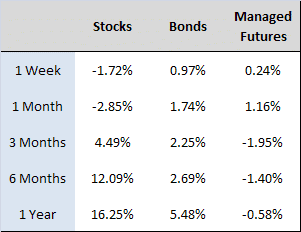
Stocks = S&P 500, Bonds = Vanguard Total Bond Market ETF (BND), Managed Futures = Newedge CTA Index
Doesn’t exactly paint the apocalyptic blowup that everyone anticipated. What was intended to reflect poorly on the creditworthiness never slowed down U.S. treasuries, and only dinged stocks momentarily. Why wasn’t there more backlash? Part of the reason was that even if our credit wasn’t great, it was still perceived as better than the other guy’s. It was also part of a TBTF economic perspective in the markets- the idea that the powers that be will never let things get that bad.
At the risk of sounding like one of those “this time is different” people, it does, in some ways, appear as though we’re getting to a turning point. The fiscal cliff is getting closer, and if the game of political chicken we saw last year gets a second take, and if there is not faith that the incoming Congress will be any different, we might be in trouble. Volume is already pretty low, with more investors disillusioned by the game. As one observer quipped on a Business Insider article last week, “The Herd of High Frequency Trading Bots are making peace with each other today because there’s not enough Muppets to rob.” If we can’t get our act in order, low volume paired with volatile circumstances could mean we’re in for trouble.
And what about those managed futures numbers? They aren’t particularly rosy. But why? Aren’t managed futures supposed to be intended for these types of volatile moments? As we discussed in our review of 2011, the difference is what followed the volatile moment. The markets didn’t respond with fear or elation; they responded with unease, facilitating choppy volatility and shorter trends that took a chunk out of managed futures performance. Some programs did well in the climate, especially agricultural programs, but it was not a climate that was beneficial for traditional longer-term trend followers.
So what next? It depends on whether the markets continue to drink the TBTF policy Koolaid, and for how long politicians continue to dole it out. With no firm action out of the Fed, and continued political uncertainty surrounding ECB plans, we aren’t confident the drinking supply will be sustained, but who knows? Stranger things have happened.