
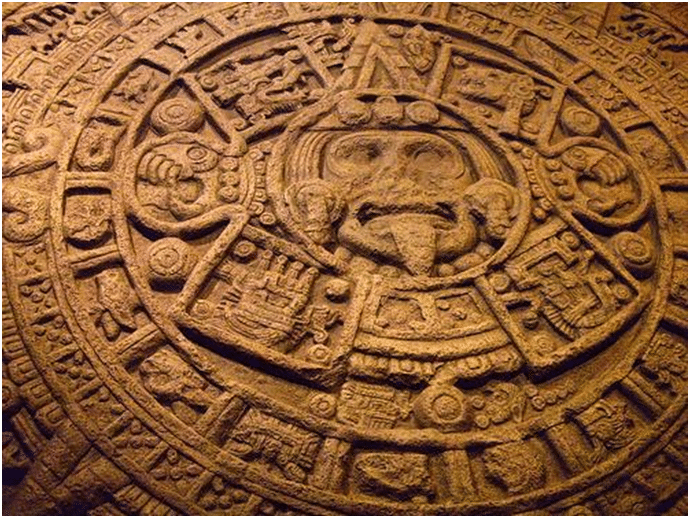
Predicting Doomsday is evolving from the crazies pleading in the streets, to the next fad that doesn’t seem to disappear. Remember how we were all supposed to die during last year’s winter solstice because the Mayan calendar allegedly ended?
Well, Doomsday fever is spreading in the finance world. We’ve even been a part of it. After all when stocks are volatile, managed futures thrives {past performance is not necessarily indicative to future results.} Like we’ve been saying, markets are on the move. A recent Business Insider article attempts to debunk this perception that the economy and the stock market are highly correlated. The evidence is that volatility is increasing, more companies are reporting negative preannouncement trends, despite high returns toward the end of the 2nd quarter.
After weeding through multiple market doomsdays articles, the numbers that jumped out at us was from the Wall Street Journal’s MarketWatch.
And…
“This 2014 crash is virtually guaranteed. There’s but a narrow 2% chance of dodging this bullet.”
Those are incredibly bold claims. So what are their facts? Where are they coming from? The past 4 years have littered the investment highway with carcasses of those who have been calling for a crash and it hasn’t happened.
We’re dissecting their accusations to see if there’s any evidence out there, or if it’s hot air blowing in the wind.
First we start with Queen of the Castle, the QE and Bernanke.
Their number one claim:
“1. Bubble With No Name Yet triggers the biggest crash in 30 years
All three of the big worldwide financial bubbles that have blow up in the last three decades have “been fueled by the Fed keeping policy rates below the nominal growth rate of the economy far too long,” says global strategist Kit Juckes of the French bank Societe Generale.
The three bubbles: The Asian Bubble in the early ‘90s, Dot-com Bubble of the late ‘90s and what Juckes calls the Great Big Credit Bubble that triggered the 2008 Wall Street meltdown.
Juckes warns that we’re now trapped in the fourth megabubble fueled by the Federal Reserve in the last 30 years, since the rise of conservative economics. He calls this one, the Bubble With No Name Yet. OK, we invite you to send in your nomination to name the new bubble. But whatever you call it, do it fast, it’s close to popping, like the Asian, Dot-com and Credit crashes the last 30 years.”
Hmm, relevancy wins this round. Bernanke just announced they were delaying the slowdown of the QE3 after concerns that the economy wasn’t as stable enough. However, It’s still a mystery as to how much badly the markets will react when QE finally ends. Would someone be able to qualify that as a bubble? Even though we all know it’s coming?
Next: Stock Market Cycles:
6. Cycles happen. We’re now in the 5th year of a typical 4-year bull rally
“Everyone on Wall Street, Main Street and Washington keeps forgetting the fundamentals of market cycles. Please remember: Investors Business Daily’s Bill O’Neill, author of “How to Make Money in Stocks,” says market cycles average 3.75 years up, nine months down.
But “averages” are old data, not future facts. Happy talk won’t restart a bull. And more warnings won’t puncture an old bubble. Cycles have lives of their own, move up and down when they damn well feel like it. That’s nature.”
Not sure if we buy this one… We are very clear that past performance is not necessarily indicative of future results. Meaning, cycles don’t really exist, they are more like trends then cycles.
If these guys really knew the crash was one its way, they wouldn’t be broadcasting it to the world. When an article points to a bubble that isn’t named, it’s pretty easy to take credit for a bubble if the predication becomes reality. If any of these claims did come to fruition, this would be bad, but typically when markets crash, we’re blindsided by it because we don’t know what it is, or else we would take action to prevent such disaster. If only we had a scorecard of all the false stock market crash predictions…