
Unless you’ve been hiding under a rock all weekend, you all know the news out of Japan. While initial reports indicated that the nuclear facilities in range had been secured in time to prevent any major damage, subsequent explosions on site have caused near panic as news of radioactive leaks have spread. No one knows yet just how substantial the damage will be to the world’s 3rd largest economy, which is among the world’s leading importers of Oil, Corn, and Cattle, but the Nikkei stock index down -7% since the quake can give you and idea.
The last time Japan (and the rest of the world) was affected by an earthquake anywhere close to this magnitude was the Kobe quake of 1995, and that was only a 7.2. Thus far, the markets are following a relatively similar path to that time period, with the Nikkei Index dropping 6.2% already today (WSJ).

In 1995, Nikkei dropped 7.99% within four days of the quake. We’re only on the third day of trading since the 2011 quake, and it’s dropped 7.81% – taking most global stock markets with them (not to mention commodities like Platinum which are used in Japanese car production). If you weren’t listening last week when we said it was time to diversify, you might want to now.
How this will play out over the next several months is anyone’s guess. In looking at the moves in Japan’s largest import markets of Oil, Corn, and Cattle in the months of demand disruption after the Kobe quake, we can see there wasn’t a clear cut ‘trade’ to be put on. This is due to several factors, the largest of which is that even the world’s third largest economy (2nd largest at the time of the Kobe quake) having a hiccup isn’t enough to overcome other factors such as supply, interest rates, and more.
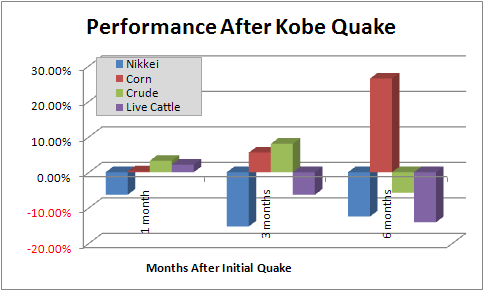
But this demand disruption looks to be on a larger scale – and comes at a time when other market currents are going the other way. On one hand, violence in the Middle East and inflationary pressures due to quantitative easing have been driving commodity futures higher and higher. On the other, the earthquake affecting the world’s third largest economy can drop demand (causing for lower prices) for things like oil, platinum and corn in the face of lowered production capabilities. For today at least, the quake is winning.
We mentioned in our 2011 Managed Futures Outlook that we thought managed futures performance in 2011 would be driven by downtrends in commodities instead of higher and higher highs, positing that a trend reversal would cause short term pain for many CTAs as they were stopped out of long positions, before longer term gains after initiating short positions. Could this be the catalyst which finally ends the lengthy up trend which has essentially been in place in most stocks and commodities since March of 2009, and technically speaking since mid November 2010? Stay tuned…
We don’t know what the future holds for Japan, but as the damage is assessed, our thoughts and best wishes go out to their beleaguered people.
Use the following link if interested in donating to the relief effort: https://www.charitynavigator.org/index.cfm?bay=content.view&cpid=1221